


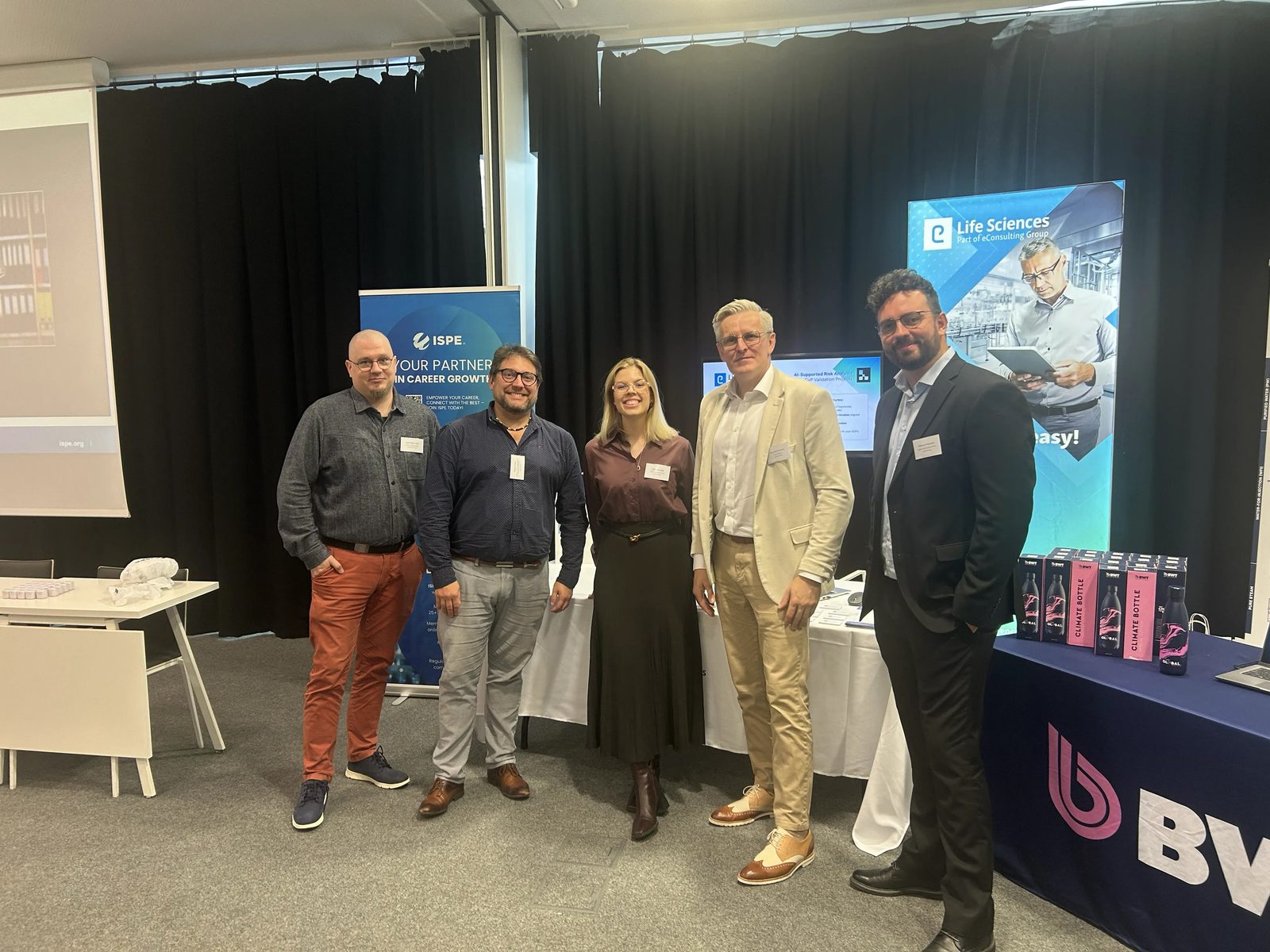
On 15 and 16 September 2026, eLife Sciences participated in the ISPE Nordic-Baltic Validation Summit in Vilnius as a Tabletop Partner. Over two days, our team exchanged perspectives with validation specialists, quality leaders, and representatives of regulatory institutions from across the Baltic region. Michał Timler also delivered a session titled Accelerating GxP Risk Analysis Without Losing the Human Touch.
One point became particularly clear across the presentations and conversations throughout the event: the life sciences industry is moving past broad conversations about “going digital.” The focus has shifted squarely to execution: how to shorten validation and qualification timelines, retain expert oversight, maintain robust decision traceability, and safely incorporate AI into established quality frameworks.
Below are five key market takeaways from the Vilnius summit and what they mean for the future of validation.
1. Validation and Qualification Expertise Remains in Short Supply
Conversations with technical specialists and representatives of regulatory institutions from Lithuania and Latvia repeatedly returned to a persistent industry challenge: a shortage of professionals with deep technical validation and qualification expertise.
Technology alone does not solve resource constraints. Even advanced digital systems require experienced specialists who understand GxP principles, can evaluate risk accurately, and take accountability for quality decisions. For companies expanding manufacturing facilities or modernizing production lines, resource scarcity directly impacts timelines, budgets, and project continuity.
Key takeaway: The practical challenge in the Baltic region and beyond is not just software adoption, but access to qualified talent. Technology delivers the most value when it enables experts to move faster from complex data to a well-documented and traceable decision.
2. The Value of AI Must Be Measured by Time to Production
When discussing artificial intelligence in regulated environments, abstract promises about machine learning models fall flat. Attendees and speakers alike focused on operational outcomes: reducing documentation preparation and review cycles, enabling faster quality decisions, and accelerating time to production.
In CAPEX projects, where delays carry heavy operational and financial costs, decision-makers are looking for targeted relief. A technology is only as good as the specific bottleneck it eliminates without compromising quality, compliance, or the ability to audit the underlying reasoning.
To deliver practical value, digital tools must support a coherent workflow: structured source information, assisted risk analysis, expert review and approval, and a traceable output. This is the context in which LISC supports Quality and Validation teams through a Human-in-the-Loop approach.
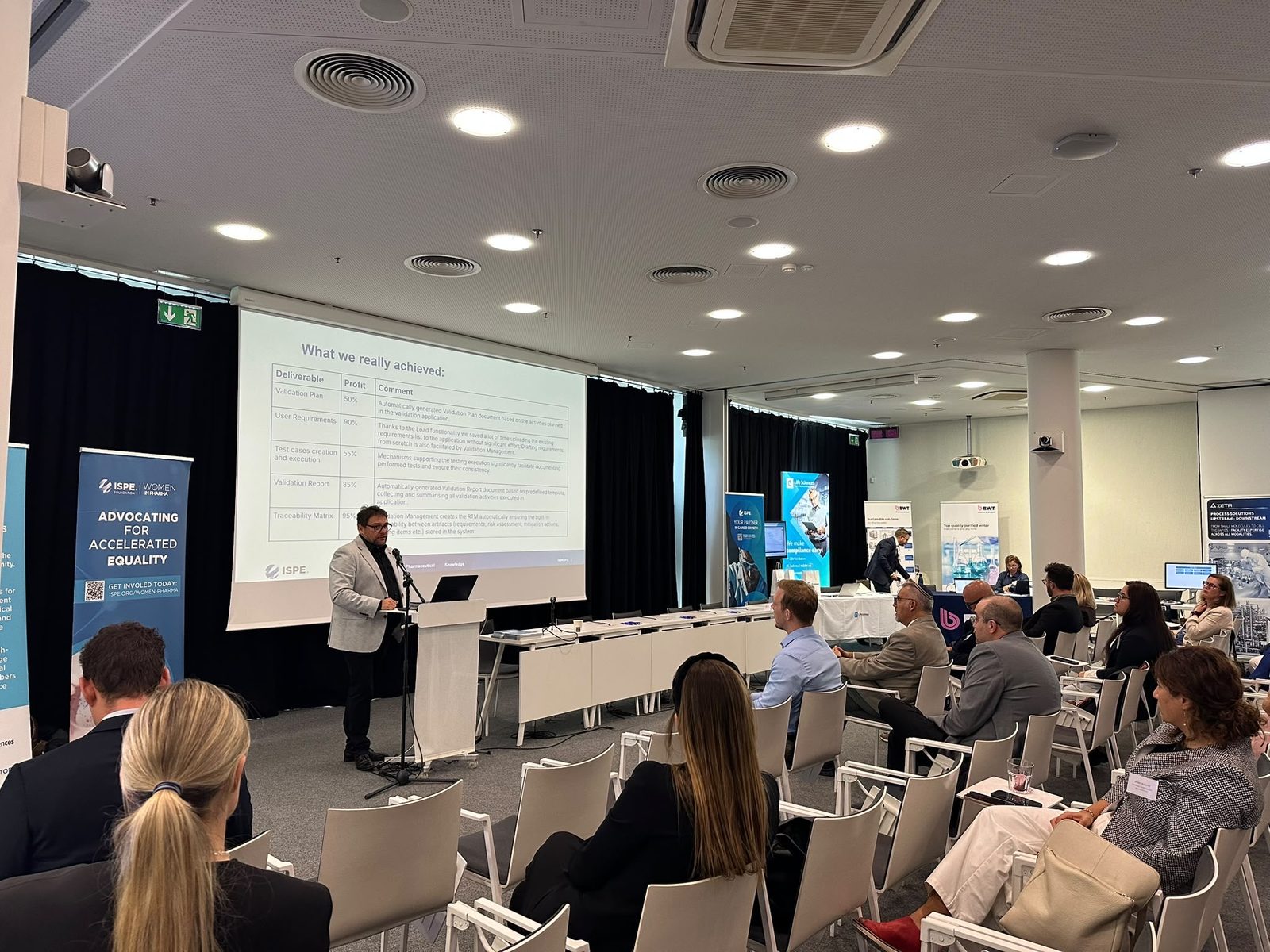
Michał Timler presenting “Accelerating GxP Risk Analysis Without Losing the Human Touch” at the ISPE Nordic-Baltic Validation Summit in Vilnius (16 September 2026)
Key takeaway: The measure of AI in GxP environments is not capability in the abstract, but time to production. The greatest operational value comes from removing specific document and review bottlenecks while maintaining human oversight and full auditability.
3. Risk Management Is Moving from Static Documents to Full Lifecycle Control
Market messaging across the summit demonstrated that validation strategy is evolving beyond isolated risk assessment exercises. Companies are increasingly looking at how risk management integrates with broader QMS frameworks, existing site systems, and paperless validation workflows.
Clients are no longer comparing tools based solely on the quality of a single generated report. Instead, they evaluate how easily risk assessments can be updated, how change management is handled, and how risk data flows seamlessly into subsequent stages of the quality lifecycle.
Key takeaway: The next phase of validation digitization does not end with generating a risk analysis. True value is created when risk data can be continuously developed, reviewed, and leveraged throughout the entire asset and process lifecycle.
4. Data Governance and Deployment Models Are Core Business Decisions
In discussions surrounding AI and cloud-based quality tools, architectural considerations—such as on-premise vs. cloud deployment, data confidentiality, access control, and long-term infrastructure costs—are taking center stage.
For regulated companies, questions about deployment models arise early in the procurement process. Factors such as data sovereignty and predictable cost structures often weigh just as heavily as system functionality.
In a regulated AI context, knowing what a model can do is only the beginning. How the system is deployed, how data privacy is controlled, and whether the basis of each decision remains traceable and reviewable over time are equally decisive factors for business adoption.
Key takeaway: In regulated environments, system architecture is just as critical as software functionality. Long-term adoption depends on clear data governance, predictable deployment models, and fully traceable decision-making.
5. Adoption Requires Real-World Touchpoints and Active Expert Communities
A notable aspect of the summit was the strong engagement with live, practical demonstrations and interactive sessions. Validation and quality decisions mature through direct evaluation, technical dialogue, and trust.
Events like the ISPE Nordic-Baltic Validation Summit serve as vital platforms for the exchange of practical insights. Implementing new methodologies in validation requires more than passive presentations; it demands opportunities to test tools against known use cases, engage in peer discussions, and address challenging technical questions directly.
Key takeaway: Adopting new validation methodologies requires direct engagement and technical dialogue. Long-term trust in digital tools is built when quality teams can evaluate solutions against real-world workflows and engage openly with industry peers.
Looking Ahead
The discussions in Vilnius reflected a practical shift in GxP validation. Digital tools and AI are increasingly evaluated by their ability to shorten timelines, support expert review, maintain decision traceability, and operate securely within established quality processes.
Visionary leadership and clear strategy are equally essential. As demonstrated by Lithuania’s ambitious biotech ecosystem and flagship initiatives like Bio City in Vilnius, building global-scale infrastructure requires strong alignment, ambitious targets, and timely execution—because the best time to innovate is always today.
For Quality and Validation teams, this forward-looking mindset means applying digital tools to clearly defined workflows while preserving expert oversight. As technology matures, maintaining human accountability will be key to delivering measurable, long-term value across the validation lifecycle.
To discuss how this approach could support your validation processes, contact the eLife Sciences team.